Methane
Methane is a light, odourless, and highly flammable gas with the chemical formula CH4. It can be produced either from fossil sources, biomass or electrosynthesis.
As a marine fuel, methane is usually used in the form of liquified natural gas (LNG), methane cooled to -162°C (-260°F), converting it to a liquid and reducing its volume by a factor of about 600.
Sources: LR (Zero Carbon Fuel Monitor) and SGMF (Methane as a Marine Fuel: An Introduction)
Technical seminar series
Visit our dedicated page for video and presentation slides from the one-day Technical seminar on methane-based fuels, held on 12 May 2026.
Definitions
A wide range of terminology is used to describe methane-based products and fuels, and the terminology used can vary between sources. Terms used to describe methane as a fuel often vary based on the production method, rather than indicating any significant difference in chemical composition of the fuel.
To clarify the different terminologies used on this page and in linked resources, please refer to the following definitions adapted from SGMF’s Methane as a marine fuel: An introduction:
Methane:
Natural gas, liquified natural gas (LNG)
These generic terms may be used to broadly describe methane-based fuels, irrespective of the production method.
These terms are also often used to refer specifically to fossil natural gas extracted from underground deposits and then processed into liquid form. Composed primarily of methane (80–99%), fossil-sourced methane fuel contains smaller proportions of ethane, propane, butane, and trace levels of nitrogen.
Bio-methane:
Bio-liquified natural gas (bio-LNG), liquified bio-methane (LBM)
Produced using organic waste materials through a multi-stage biological and industrial process.
e-Methane:
Synthetic natural gas, synthetic LNG, e-NG, e-LNG, liquid synthetic methane (LSM)
Artificially produced methane created through a “Power-to-Gas” process using renewable energy and captured carbon dioxide.
LNG as a marine fuel
LNG bunkering development
Overview of key LNG bunkering developments and how this expanding infrastructure aligns with major global shipping routes, traditional oil bunkering ports, and the bulk LNG infrastructure which will provide the foundation for future bunkering services. Visit the SEA-LNG Bunker Navigator to explore this data.
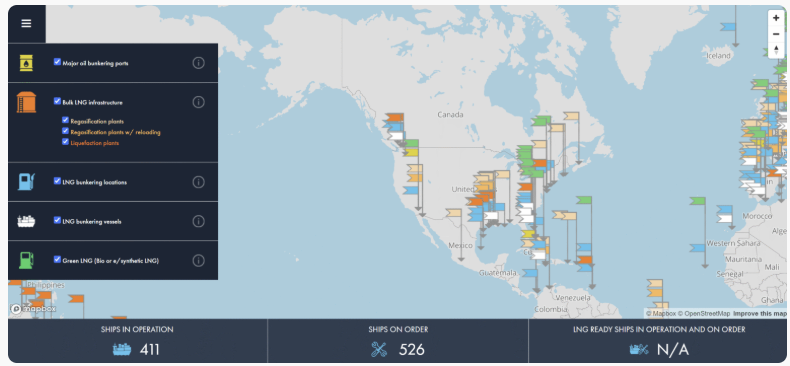
*There are around 190 LNG bunkering ports globally with another 80 locations implementing plans or actively considering LNG bunkering. Bio-LNG is available in over 70 locations in Europe, North America and Asia.
Supply of LNG
The latest developments in bunkering infrastructures for alternative fuels including LNG, as provided by DNV’s Alternative Fuels Insight (AFI) platform.
Global LNG-fuelled ships and infrastructure
The map below shows the number of global LNG-fuelled ships (in operation and on order) and key bunkering points (available and under development). To learn more, please visit SEA-LNG.org.
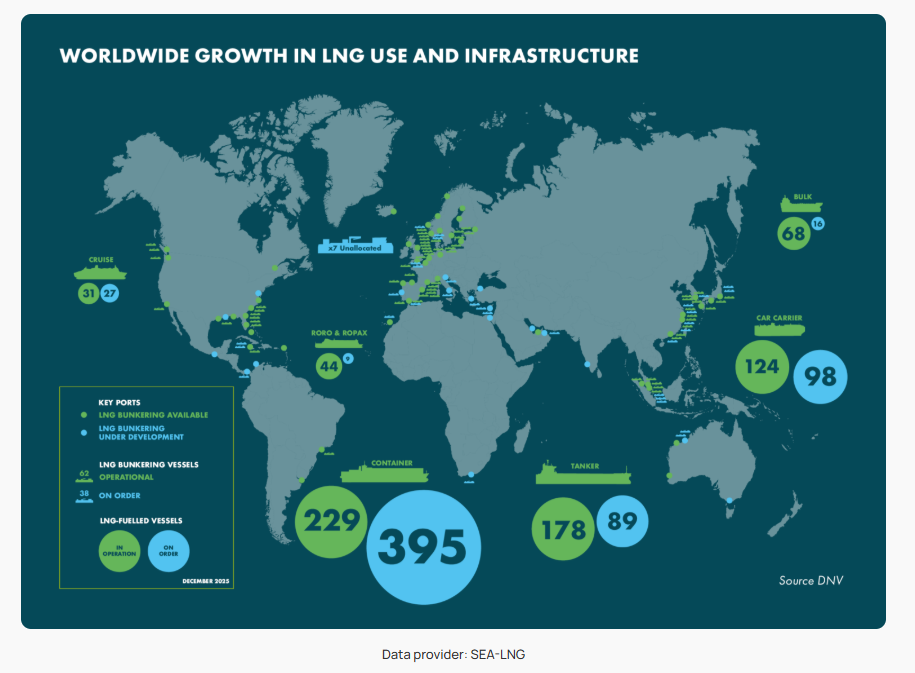
Uptake of LNG
The latest developments in shipping’s uptake of alternative fuel including LNG, as provided by DNV’s Alternative Fuels Insight (AFI) platform.
LNG fuel prices
Global alternative marine fuel price information, including a map that displays price gaps between conventional fuels and alternative fuels across various regions, along with a calculator to estimate the cost of marine fuels worldwide are available from Argus Media and S&P Global through the Data Overview section.
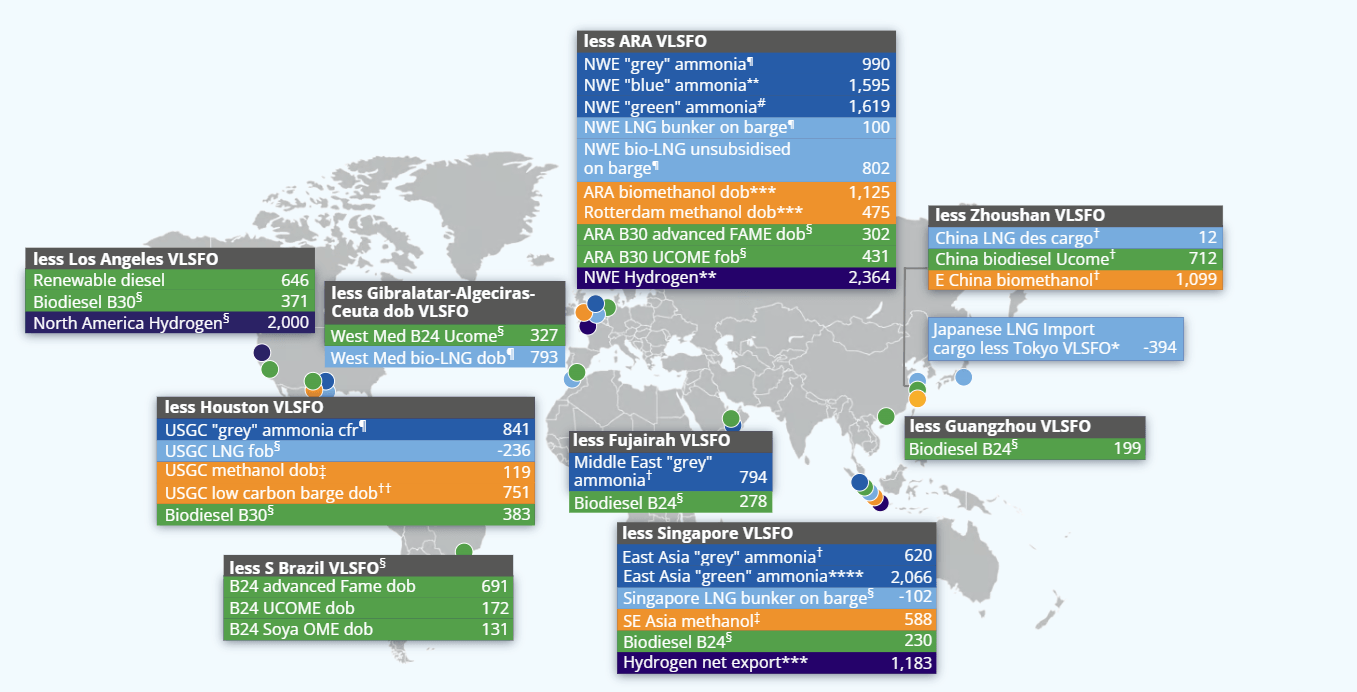
Argus’ global map on alternative fuels premium
Argus’ global map provides price gaps between conventional fuels (very low sulphur fuel oil, VLSFO) and alternative fuels for different regions.
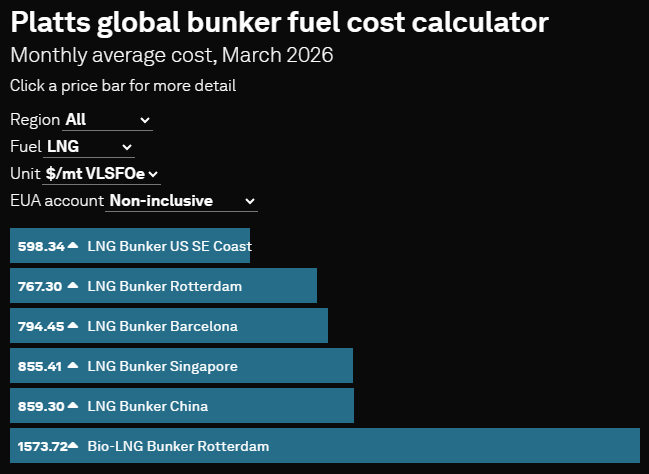
Platts global bunker fuel cost calculator
The Platts global bunker fuel cost calculator shows how Platts price assessments can be used to calculate the cost of marine fuels around the world.
Explore further information on methane as a marine fuel in reports and resources from the Project’s data providers:
Bio-methane
Bio-methane is produced and liquified for use as a marine fuel from organic waste materials through a multi-stage biological and industrial process:
Raw materials:
Bio-methane is derived from animal manure, sewage sludge, or green waste, which are broken down by bacteria in the absence of oxygen through anaerobic digestion.
Production process:
The production of liquified bio-methane (bio-LNG) is a multistage process involving pretreatment, anaerobic digestion, biogas cleaning, upgrading to biomethane, and biomethane liquefaction.
Composition and upgrading:
Explore additional information on bio-methane in reports and resources from the Project’s data providers:
- LR: Explore liquified bio-methane readiness levels
- World Biogas Association: Pathways to 2030
- World Biogas Association: presentation at the Technical Seminar on Marine Biofuels 2026 – PowerPoint Slides | Video
E-methane
E-methane is artificially produced methane created through a “Power-to-Gas” process using renewable energy and captured carbon dioxide. The process involves combining:
- Renewable hydrogen (produced from water electrolysis using renewable electricity)
- Captured CO2 (from industrial processes or direct air capture)
- These react to form synthetic methane (CH4) and water.
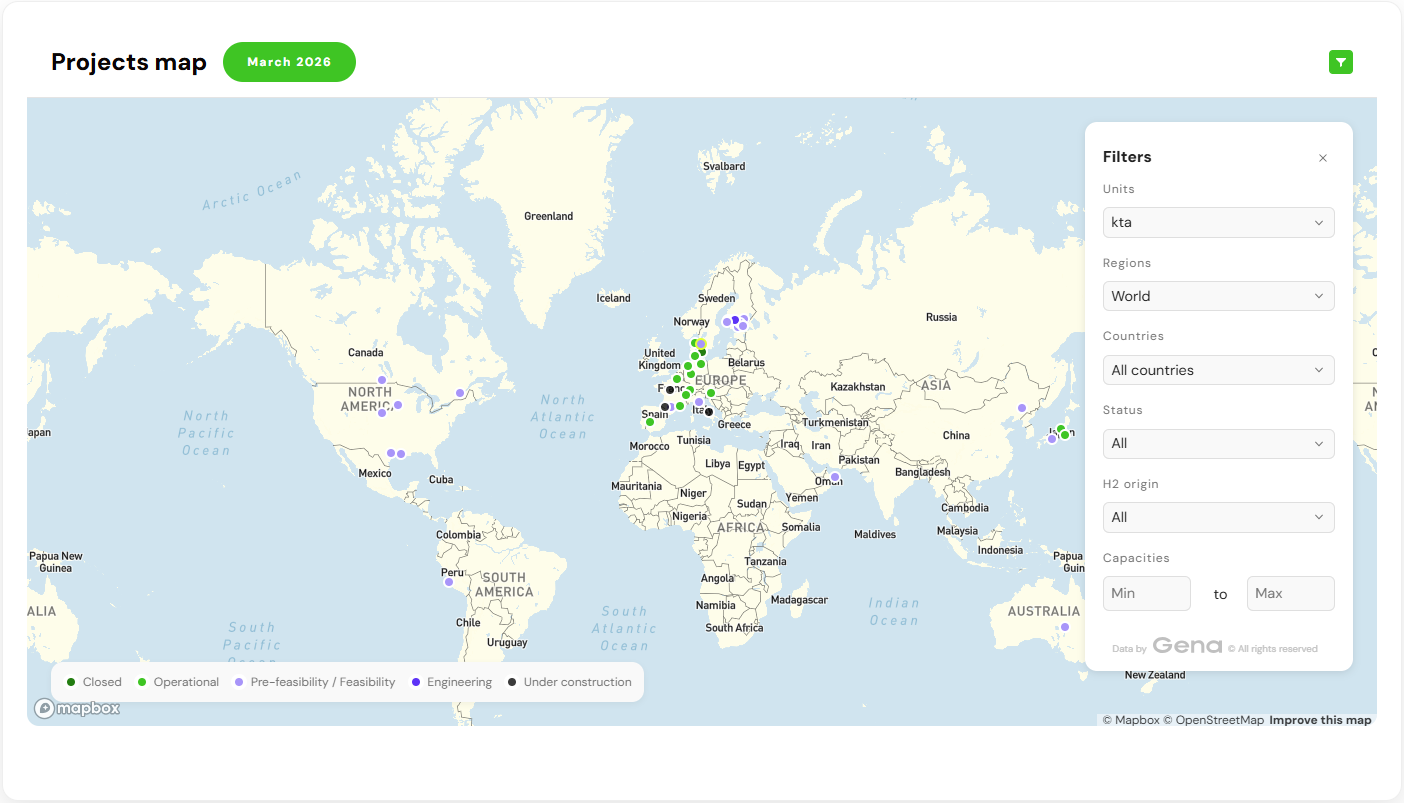
e-NG Coalition: Global Map of Electric Natural Gas (e-NG) Projects
The e-NG Project Map, developed in collaboration with GENA Solutions, consolidates verified data from more than 90 facilities worldwide. It tracks projects from pre-feasibility to Final Investment Decision (FID) through construction and in operation, with monthly updates to reflect the latest market dynamics. Visit the e-NG Coalition’s Global Map of Electric Natural Gas (e-NG) Projects
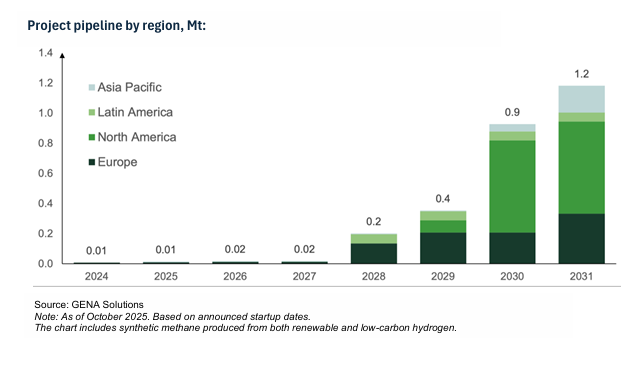
Projected growth of e-methane production to 2031
Find out more about the e-NG Coalition’s mapping and forecasting of global e-methane production
Explore additional information on e-methane in reports and resources from the Project’s data providers:
Safety
IMO regulations and guidelines
You can find information on the latest IMO regulations and guidelines related to methane-based fuels on the FFT Safety page, particularly:
Other safety information and guidelines
The SGMF Resources page hosts a range of information including bunkering/debunkering operational safety guidelines and more.
Training for seafarers
IMO also provides resources to help prepare seafarers for the energy transition in shipping:
This site may contain advice, opinions and statements of various information providers. IMO does not represent or endorse the accuracy or reliability of any advice, opinion, statement or other information provided by any information provider, any User of this Site or any other person or entity. Reliance upon any such advice, opinion, statement, or other information shall also be at the User’s own risk. Please see IMO Website: Terms and conditions of use for further information.